
In our daily work with businesses navigating organizational change, we frequently see leadership teams eager to adopt the latest technology to drive efficiency, including artificial intelligence which is actively reshaping how we work every single day. But we are also witnessing a quiet, concerning trend. Companies are adopting AI tools faster than they can train their people to use them, and in the process, they are inadvertently breaking down traditional career paths.
Here in Aruba and across the Caribbean, this challenge carries a unique weight. Our local economy thrives on relationships, service excellence, and strong organizational cultures. When multinational trends push for rapid automation, local businesses face the distinct pressure of integrating global technology while protecting the island’s most valuable asset: our local talent.
At U-SparkPeople, we believe that technological advancement should never come at the cost of human potential. This is validated by recent research from Gartner and Randstad Digital: fixing the current AI disconnect requires far more than standard software tutorials. To navigate this shift successfully, organizations must completely overhaul their approach to development and design training modules that prioritize future organizational success.
The Flaw in Current AI Training
Right now, corporate training is struggling because it is largely reactive. The same research tells us that while globally 63% of companies have invested in AI training over the past year, more than half of tech professionals (52%) report needing independent training because company programs simply cannot keep up with technological shifts.
This creates a “productivity paradox.” When we design training merely to teach an employee how to navigate a specific tool today, we create a workforce of operators rather than innovators. This leads to “acceleration without direction,” where our tools get faster, but our collective capacity to strategically govern, optimize, and question them stays the same.
True organizational success in the age of AI requires us to look past short-term tool instruction and focus on building long-term capability.
Designing Training Modules for the Future
As we recently discussed in our piece on Why People Skills Still Count When AI Is Part of the Job, the shelf life of hard technical skills is shrinking. Because technology can support or perform tasks almost immediately, modern training infrastructure cannot simply focus on static software.
To bridge the gap, leaders must build development programs designed around where the organization is going. For our local business landscape, this means balancing digital progress with the high-touch service and connection that defines Aruban commerce. Future-focused training must anchor on three core pillars:
- Agility Over Software: Shifting the focus from static tool tutorials to foundational digital literacy, ensuring teams can adapt seamlessly as AI platforms continuously evolve.
- Higher-Order Human Skills: Intentionally developing the advanced judgment, strategic thinking, and contextual awareness that AI cannot replicate, especially as routine entry-level tasks are automated.
- Continuous Integration: Combining high-impact workshops with structured development, ensuring that learning and skills validation become an ongoing part of the organizational workflow.
The High Stakes of Failing to Adapt
Employees across all industries and roles, whether in technical fields, administration, finance, or operations, are acutely aware that the ground is shifting beneath their feet. Across the board, the vast majority of professionals feel intense pressure to upgrade their skills just to stay relevant, and they are actively looking for employers who will invest in their professional growth.
When organizations fail to provide these forward-looking development opportunities, they face a very real retention crisis. Globally, a significant portion of the workforce has already walked away from employers specifically because they lacked structured upskilling. In our close-knit local market, retaining top talent is already competitive. High-performing professionals will not stay at organizations where they feel ill-equipped to handle the future of work.
The ultimate question for modern business leaders is no longer, “How much are we spending on AI technology?” but rather, “How effectively are our training programs preparing our people to drive future growth?”
Performance at a current job level is no longer a reliable metric for future readiness. With AI support, an employee can easily hit short-term goals without developing the deep expertise required for complex leadership roles. Organizations that invest today in rebuilding their learning ecosystems around adaptability, foresight, and long-term organizational needs will secure a massive competitive advantage. Those that rely on reactive models will find themselves with plenty of advanced software, but no talent prepared to lead the business forward.
Aligning Human Potential with Technical Progress
The reality of the modern workplace is that technology will continue to accelerate, but an organization’s success will always depend on the capacity of its people to guide it. Treating development as a minor administrative task or an occasional perk is no longer a viable strategy. True resilience requires a deliberate commitment to building a workforce that is not just trained for today’s tools, but equipped with the agility and judgment to handle whatever comes next.
Ultimately, the choice facing leadership teams isn’t about whether to adopt AI; it is about whether they will invest in the human infrastructure required to make that adoption meaningful. Organizations that take steps today to re-align their learning frameworks with future capabilities will protect their talent pipeline, retain their best people, and build a lasting competitive edge both locally and regionally.
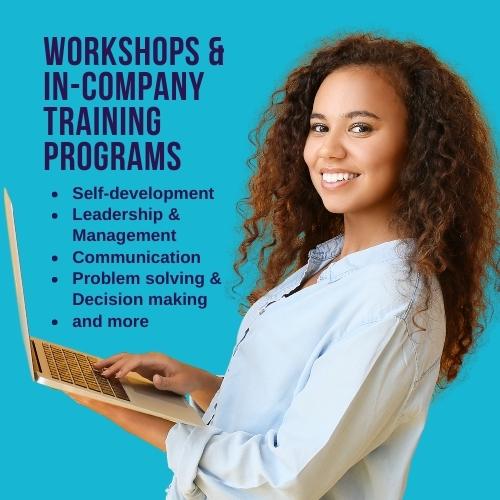
At U-SparkPeople Management & Development Consultancy, we support you in developing leaders who can confidently guide teams through uncertainty and technological change. Our learning & development programs can be tailored to help your talent grow alongside your investments.
Whether you are looking to review your current upskilling strategy or build a people-centered training program from scratch, we are here to support you.
Ready to take the next step? Let’s talk.