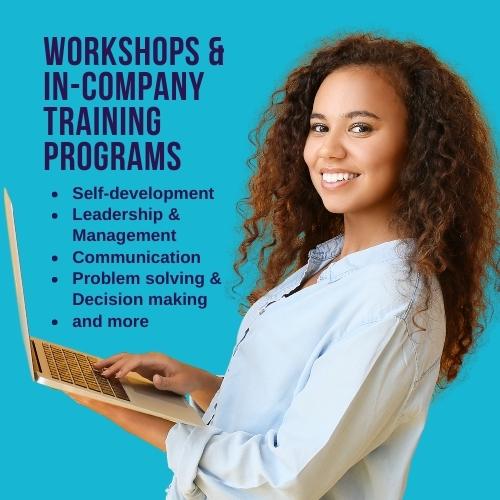

Organizations invest significant time and resources in professional development.
Employees attend workshops. Managers participate in leadership programs. Subject matter experts earn certifications. Teams gain access to online learning platforms and new opportunities to build their skills.
These investments matter. Individual growth remains an important part of organizational success.
Yet many leaders encounter a consistent frustration. Despite ongoing development efforts, organizational performance does not always improve at the same pace.
The reason is often less about effort and more about design.
Organizations do not execute as individuals. They execute as teams.
Most development initiatives are still built around individual improvement. The assumption is straightforward: increase knowledge, strengthen capability, and performance will follow.
On the surface, this logic is sound.
An employee learns a new skill. A manager applies a new leadership technique. A department head strengthens their understanding of strategy.
But organizations are rarely constrained by what people know. They are constrained by how effectively that knowledge translates across people, roles, and decisions.
A capable employee can only influence a portion of the system. A strong manager can only drive outcomes within their scope. Even the most effective leader depends on others to convert direction into execution.
Knowledge can be developed individually.
Execution cannot.
It depends on coordination, shared priorities, and how work moves across the organization.
That is where many development strategies begin to show their limits.
What often appears as a capability gap is, in practice, a coordination gap.
We see this when teams are working hard but not necessarily in the same direction. Departments define success differently. Leaders communicate priorities that are interpreted differently. Strategic intent becomes fragmented as it moves through the organization.
The result is familiar to most leadership teams. High effort, uneven progress.
Not because people lack commitment, but because effort is distributed across different interpretations of what matters most.
From Capability to Alignment
This is where alignment becomes decisive.
Alignment is not about agreement on everything. It is about shared clarity on priorities, expectations, and how individual work connects to organizational outcomes.
When that clarity is present, decision-making becomes faster. Dependencies become easier to manage. Collaboration becomes more intentional rather than reactive.
Performance becomes less dependent on individual heroics and more dependent on system consistency.
This is also where a subtle shift is required in how organizations think about development.
Many invest heavily in capability building. Far fewer invest with equal intent in alignment building.
Capability answers whether people can do the work.
Alignment determines whether they can do the work together.
An organization can be filled with highly skilled individuals and still struggle to execute if priorities compete, communication is inconsistent, or teams operate in silos.
In stronger-performing organizations, the differentiator is often not the level of talent, but the strength of connection between people, priorities, and strategy.
Leadership as a System, Not a Role
This becomes especially visible in leadership teams.
Leadership development is often treated as an individual investment. High-potential leaders are identified, coached, trained, and supported in their personal growth.
This approach has value.
However, leadership impact is rarely the result of individual effectiveness alone. It is shaped by how consistently leaders operate as a collective.
When a leadership team shares priorities, reinforces messages consistently, and makes decisions from a common strategic lens, the organization absorbs that clarity quickly.
When they do not, the organization compensates. Often through confusion, duplication, or misaligned execution.
This raises a critical question for executive teams.
Are leadership development efforts strengthening individual leaders, or strengthening the leadership system itself?
The distinction matters because it directly influences culture, communication, and decision-making consistency across the organization.
Misalignment at leadership level rarely stays contained. It moves through structure, processes, and ultimately behavior.
From Development to Organizational Performance
These gaps also explain why organizational risk is often less about capability and more about consistency.
Most operational failures, compliance issues, and customer experience breakdowns are not caused by lack of intelligence or effort.
They emerge when expectations are understood differently across teams, or when accountability is interpreted unevenly.
Over time, small misalignments can grow into larger organizational risks. Alignment helps reduce those gaps by creating more consistency in how people understand priorities, make decisions, and execute.
It creates shared reference points for decision-making and reduces the likelihood that critical information is interpreted in multiple ways.
Professional development remains essential. Organizations need capable employees, skilled managers, and effective leaders.
But capability alone does not guarantee performance.
What determines performance is whether capability is connected, coordinated, and consistently applied across the organization.
That is the difference between individual growth and organizational impact.
When development strengthens not only skills but also shared understanding and collective execution, organizations gain something more durable than capability alone.
They gain the ability to translate strategy into action without distortion.
And that is where performance begins to stabilize, not because people are working harder, but because they are working in alignment.
Where Individual Growth Meets Organizational Performance
Sustainable performance depends on both individual capability and organizational alignment.
At U-SparkPeople Management & Development Consultancy, we support organizations in strengthening leadership and alignment, while also supporting individuals in managing their career growth with clarity.
If this perspective resonates with your current challenges or priorities, we invite you to connect.